Case study
Premium vehicle manufacturer
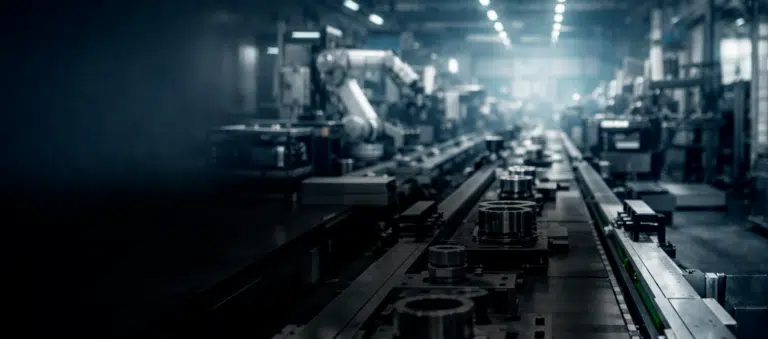
Body in White (BIW) body structure in raw steel, assembly line with a rate of 120 vehicles per day (Germany)
Limitations of the previous process
Adhesive labels applied by hand: €80k/year in labour, with the whole body scrapped when a label detached or turned illegible
Laser for high-contrast marks on steel
Laser annealing marking: no material removed, compatible with painting later in the process
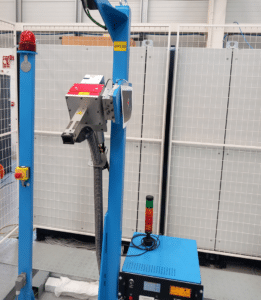
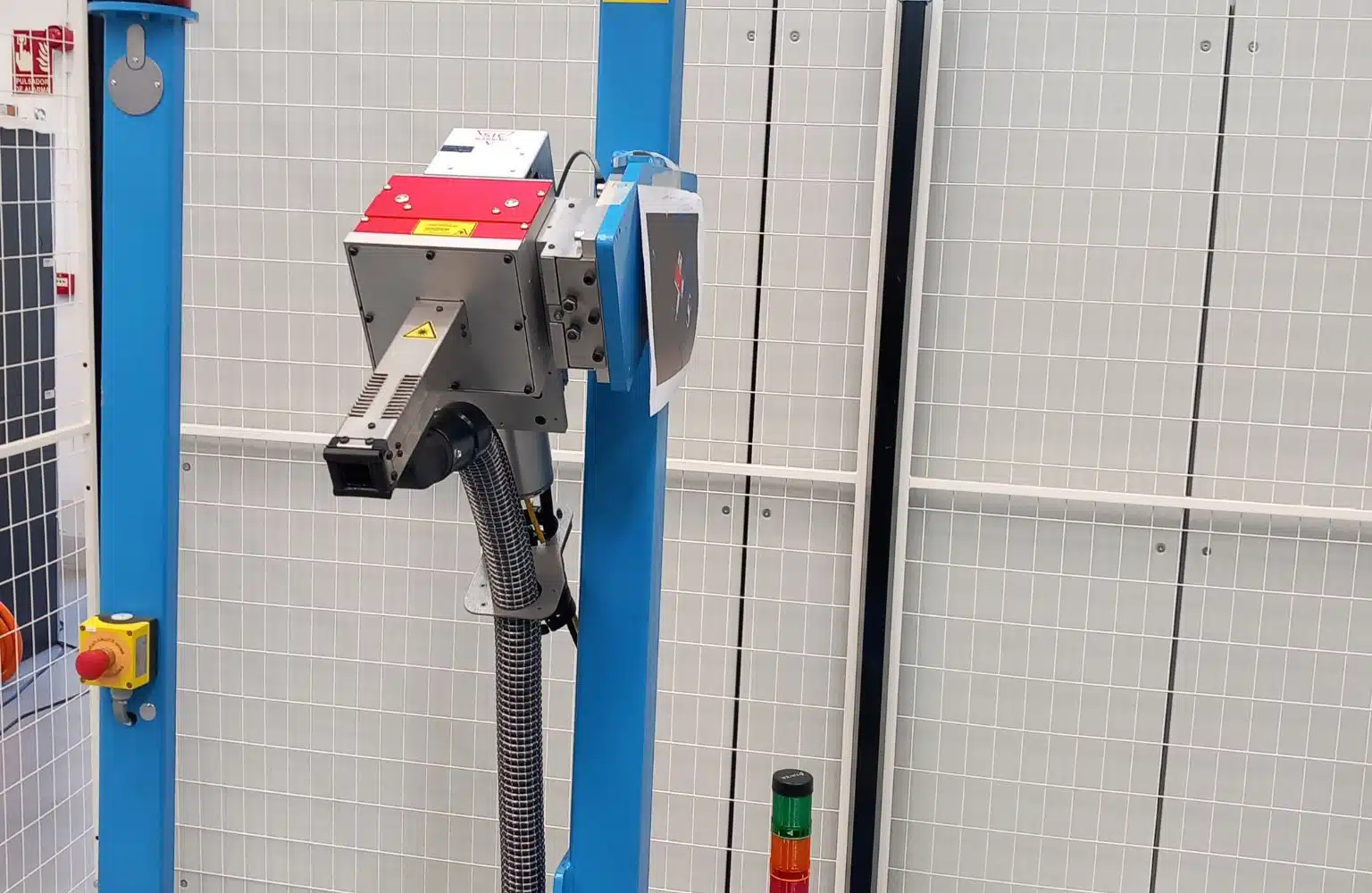
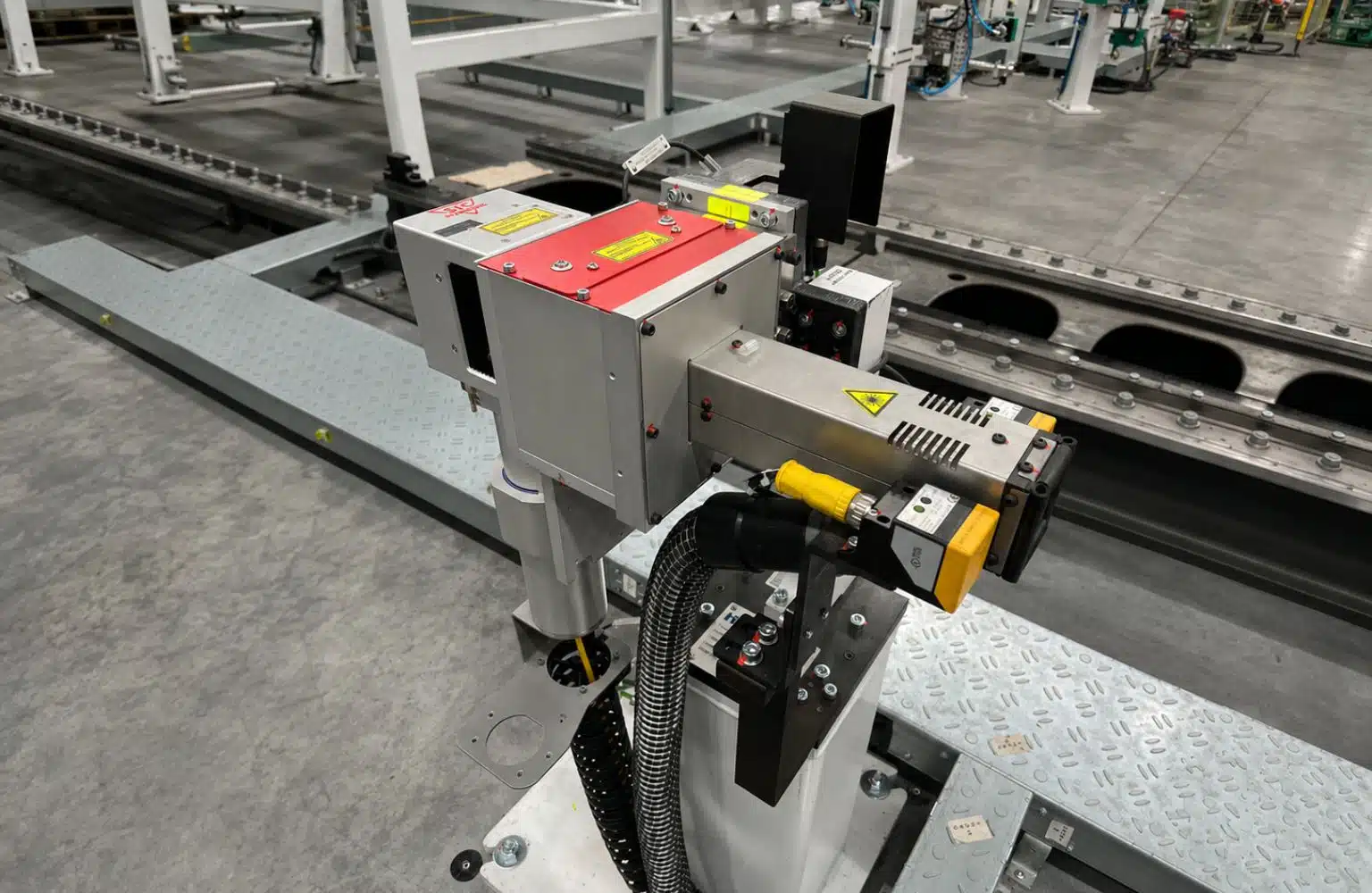
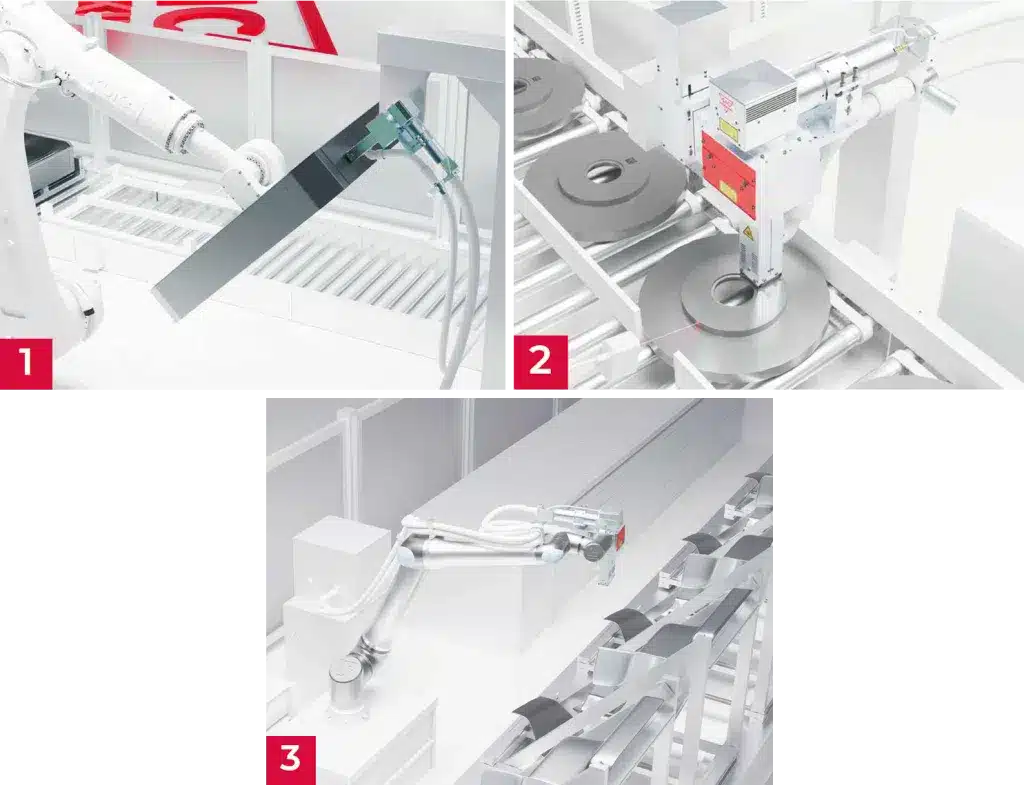
Compact integration on the line
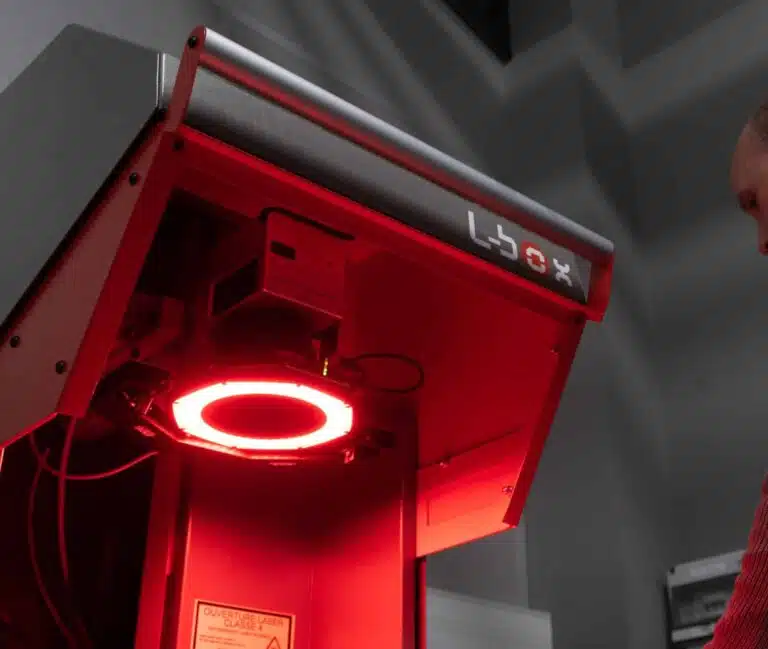
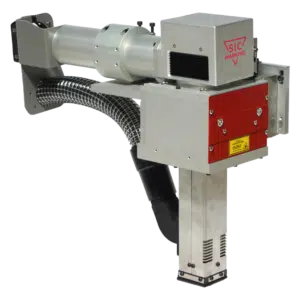
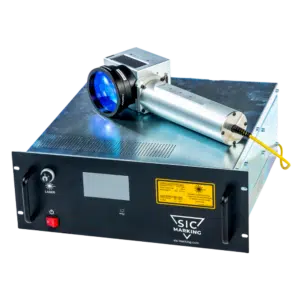
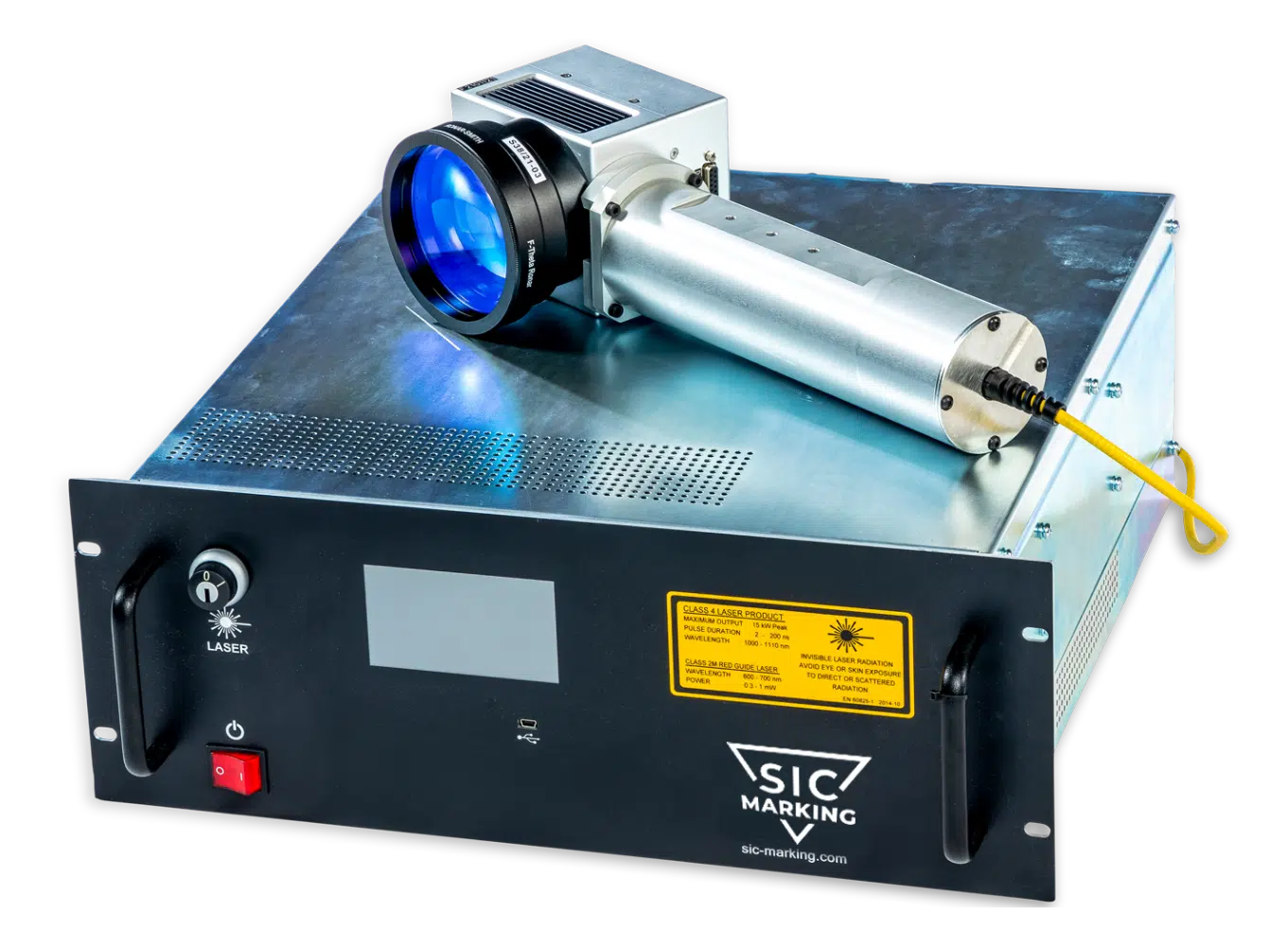
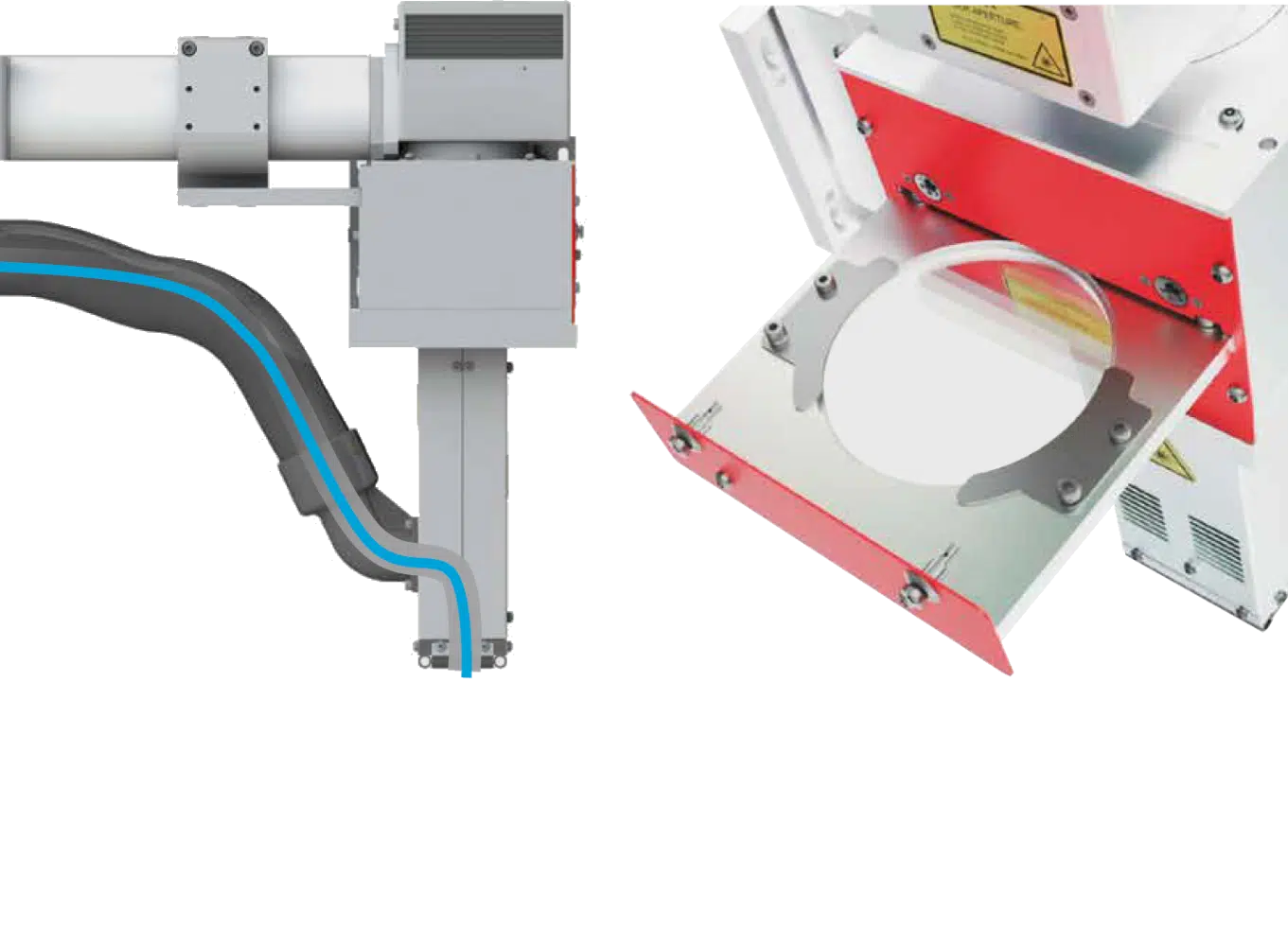
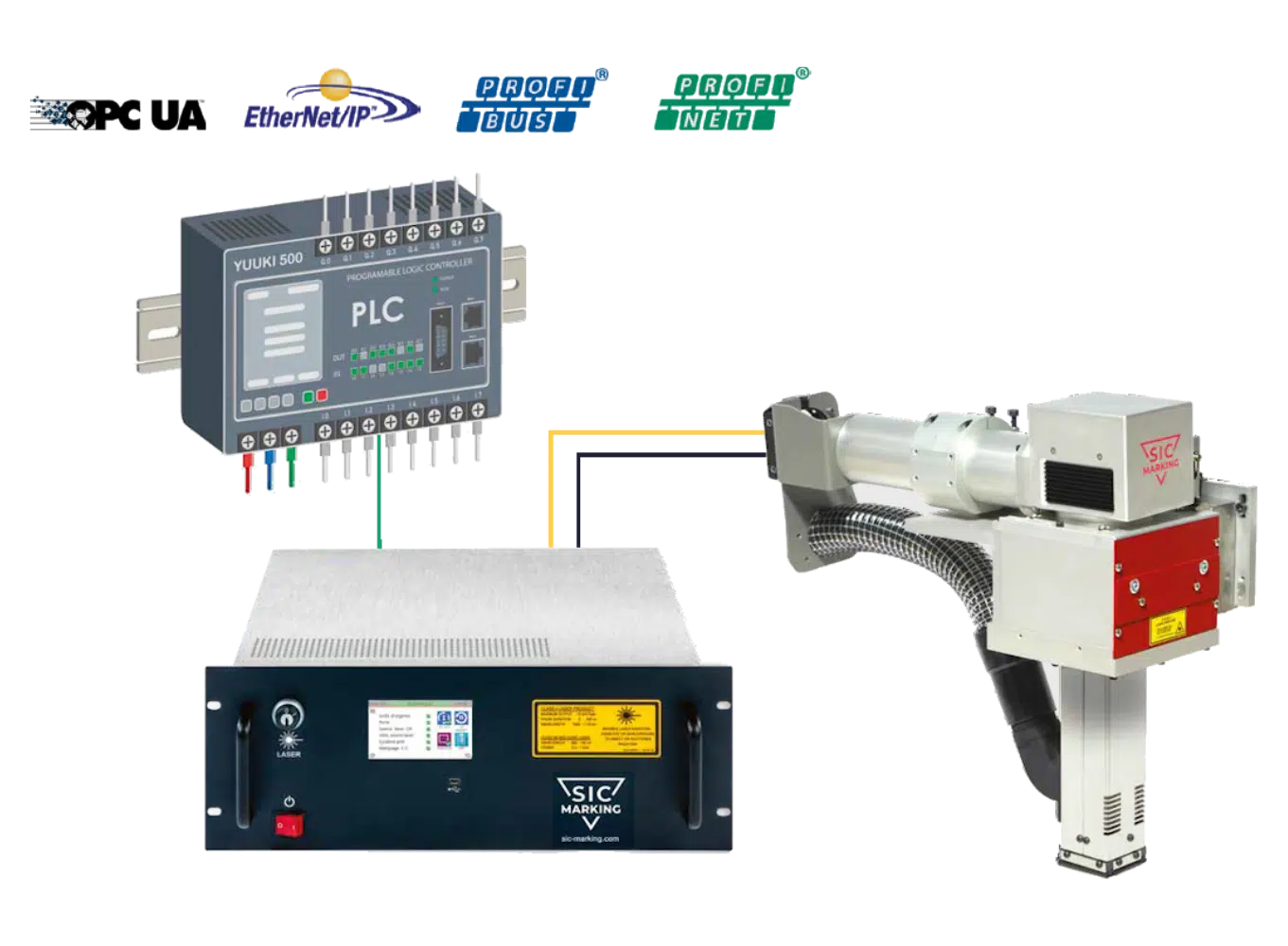
FIT 50W fibre laser, 30 × 30 mm marking window, marking rate compatible with the cycle time of the assembly line
On the Body in White line run by Mercedes, an identification label had to stay on each vehicle body for the full assembly sequence, from the first welded part all the way to the entry of the complete body into the paint shop. The label was then taken off before the body was painted. The procedure relied on one dedicated operator whose only task was to glue the labels on manually, at a yearly cost of about 80,000 euros.
The actual exposure, however, came from what happened in the event of a failure. When a label detached or turned illegible during production, the partially built body no longer had any identification. Because there was no reliable method to recover traceability at that stage, the body was sent to scrap. Given how much a Body in White is worth at an advanced assembly stage, every such incident represented a significant financial loss, many times the cost of the label itself.
What Mercedes needed was a marking method that would stay readable across the whole assembly process, resist handling and the conditions on the line, and remain compatible with the painting operation downstream.
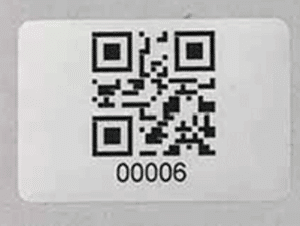
The laser marking applied to the Body in White had to meet a twofold requirement that appeared contradictory: generate sufficient contrast to ensure reliable reading throughout assembly, without removing any material or altering the surface roughness.
This constraint also applied further along the process. After the body was assembled and identified, it went on to the paint shop. From that point, the marking had to be completely hidden under the paint layers, leaving nothing visible. Any process that leaves relief, an imprint or a micro-deformation capable of showing through the finish was therefore excluded.
Running at 120 vehicles a day, the marking step also needed to fit inside the current cycle time, with neither buffer storage nor manual handling, and with enough repeatability to deliver identical legibility on each body without any operator settings.
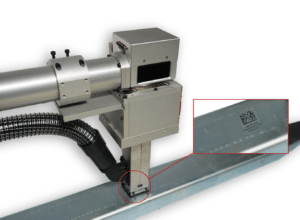
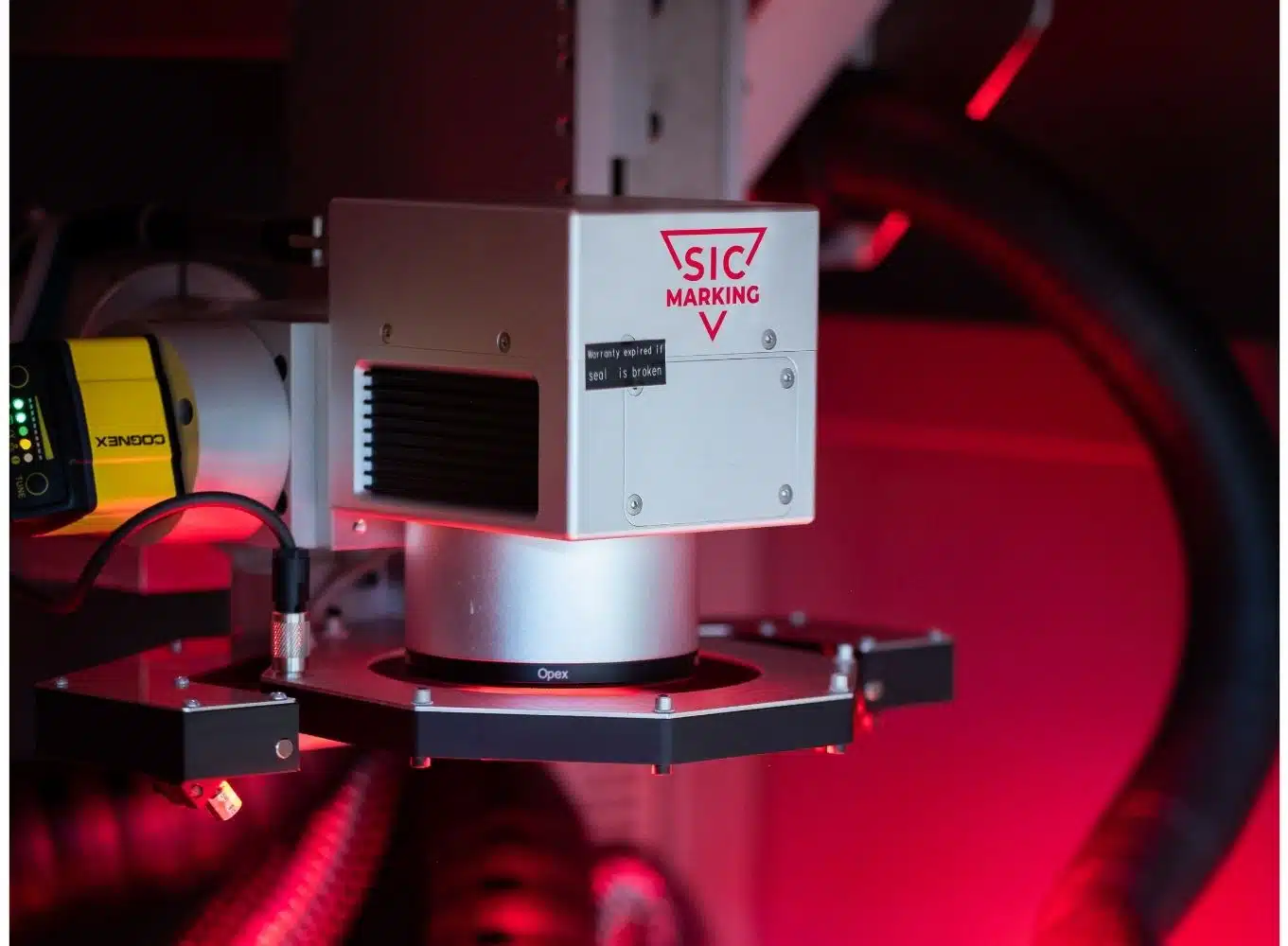
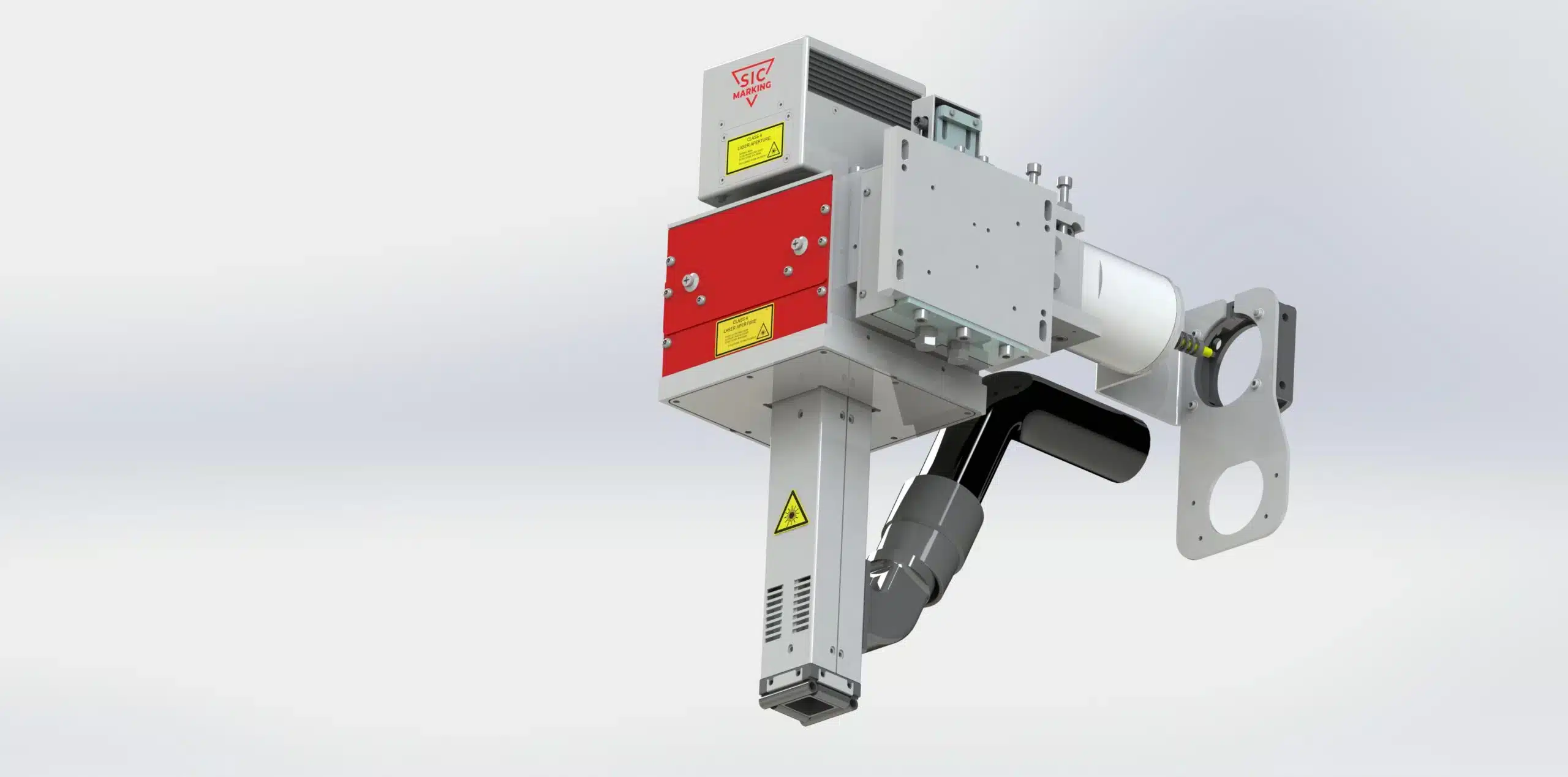
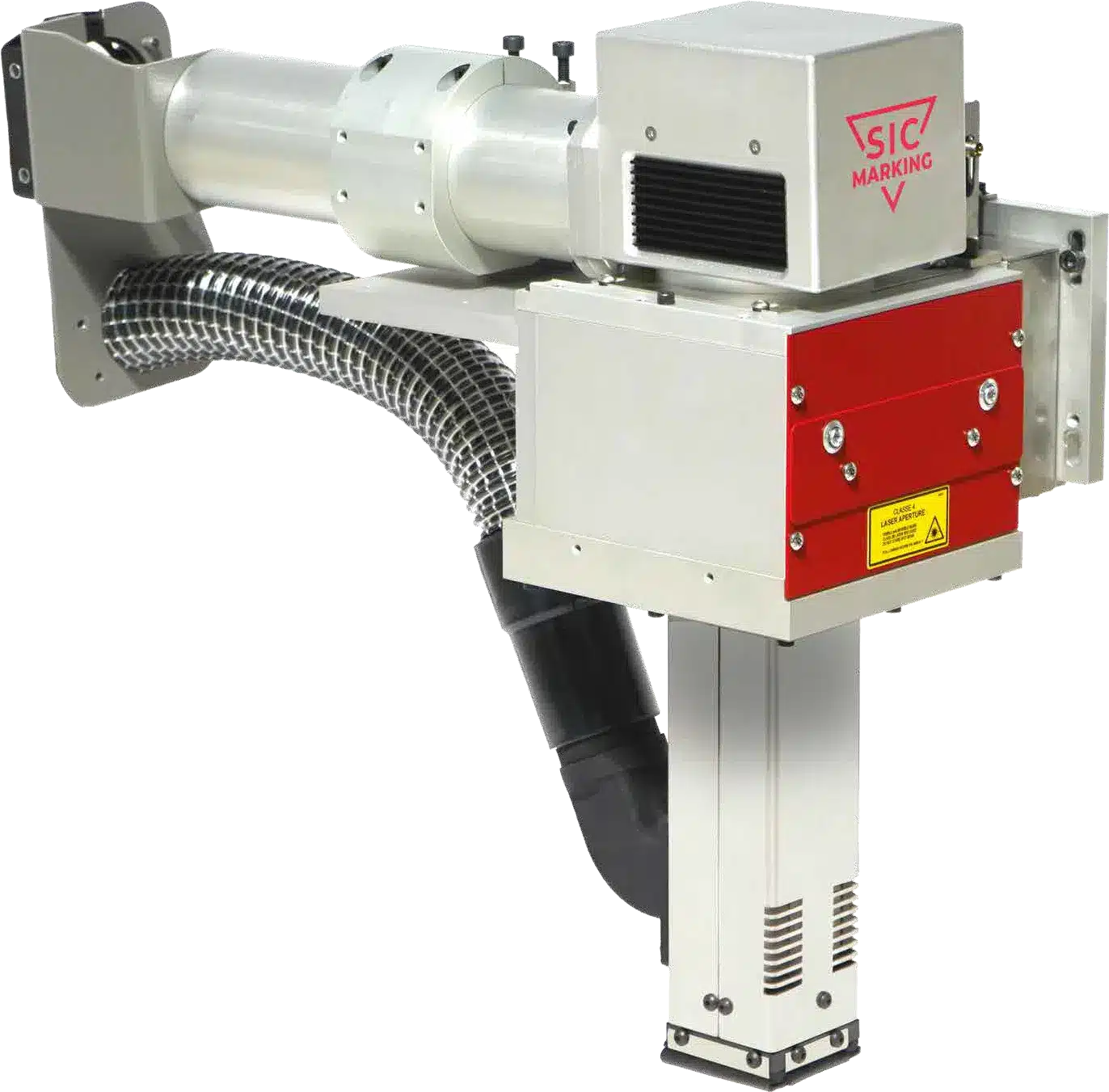
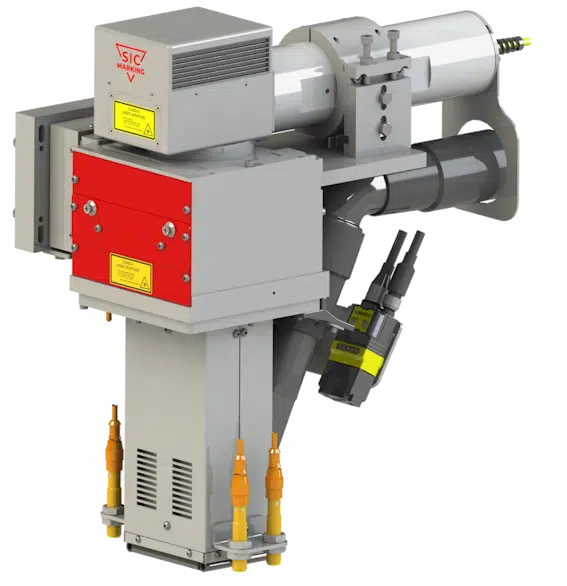
SIC MARKING recommended a FIT 50W fibre laser with a standard 30 × 30 mm marking window, adapted to the integration constraints of the Mercedes line. The FIT platform was retained because of its compact size and its aptitude for integration into automated manufacturing environments.
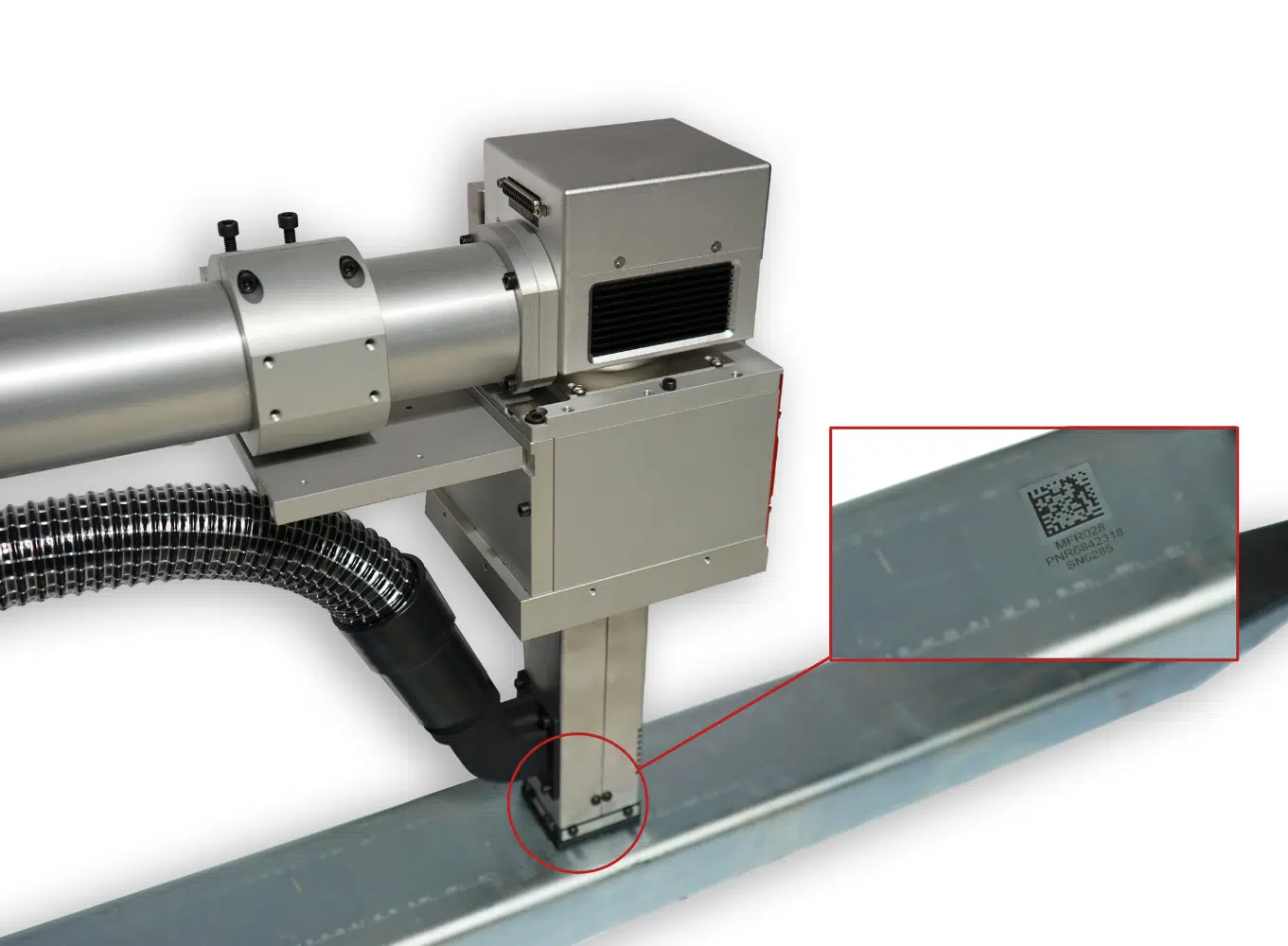
The marking mode adopted is annealing. Instead of engraving or ablating the surface of the steel, the laser heats the material under controlled conditions and creates an oxide layer that is visible beneath the surface. That change in colour (usually dark and high in contrast) delivers legibility without removing any material. As the surface is left intact, the corrosion resistance of the steel is maintained.
This approach met the two critical constraints directly: the mark is permanent and holds up to mechanical contact while the body is handled during assembly, and it produces no surface irregularity likely to disturb the paint process. The marking is simply coated with paint at the same time as the rest of the body, without any removal step or extra preparation.
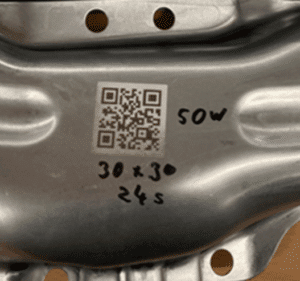
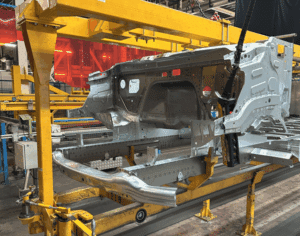
In replacing adhesive labels with permanent laser marking, Mercedes did away with the leading cause of traceability failure on its Body in White line. The mark will not detach, deteriorate or turn illegible during the assembly sequence. The risk of sending a partially assembled body to scrap because its identification was lost no longer exists.
The operator who used to glue on labels, representing €80k/year in cost, is no longer tied up with this task. The laser marking works without any manual intervention, within the production cycle time already in place.
The laser annealing marking maintained the corrosion resistance of the raw steel, a mandatory requirement for Body in White components prior to electrocoating (e-coat) and painting. The mark gets covered by the paint with no interference with the finish, so it is fully compatible with the downstream process.
Our solutions
Discover our product range
Browse our flagship laser, dot peen and scribe marking systems: portable units, modules that integrate into production lines, and standalone marking stations.

Looking for more information?
Contact our team!