Laser marking stands as a leading technical solution for meeting the requirements of traceability, compliance, and efficiency across industrial processes.
It covers the marking requirements of a broad range of sectors – including aerospace and space, the food and beverage sector, the medical field, and the automotive sector – along with the specific characteristics of a wide variety of materials, whether metals, plastics, or composites.
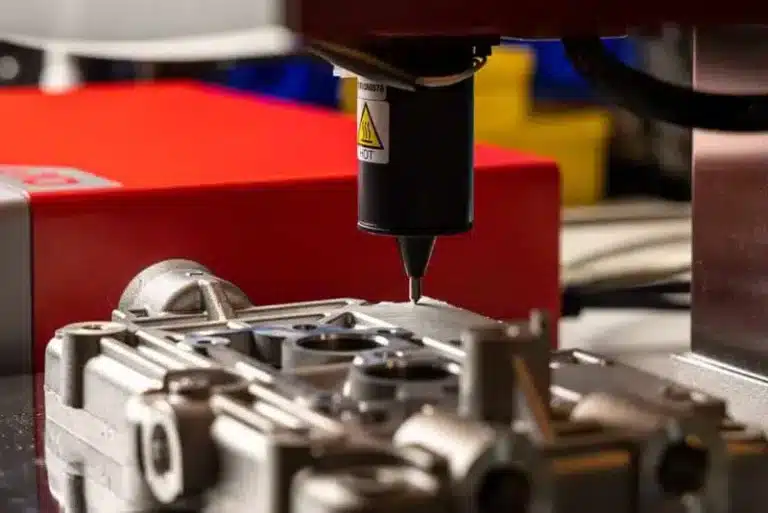
Laser technology produces a permanent mark that is precise and fully legible, without compromising the mechanical integrity of the parts.
This permanent marking strikes an optimal balance between engraving depth, contrast, and visual quality.
Once integrated into production lines, laser marking makes a significant contribution to process automation.
It makes it possible to synchronize marking with the production flow, thereby lowering downtime, errors, and operating costs while raising productivity.
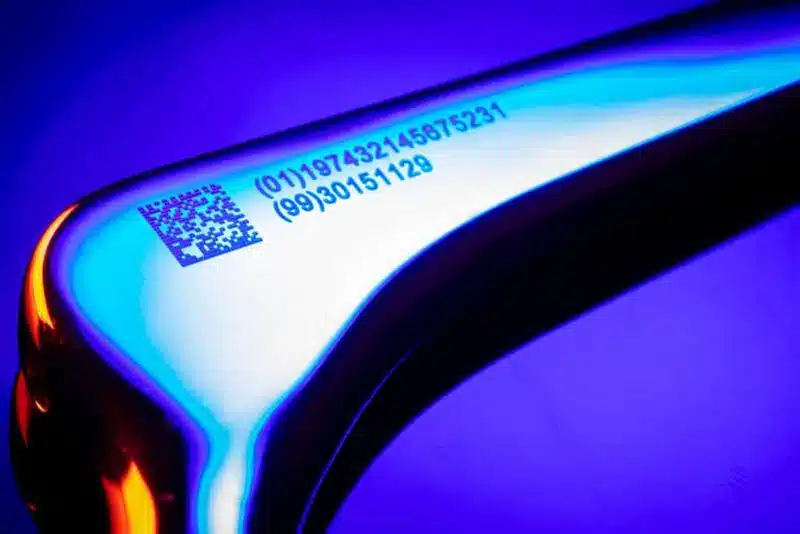
Laser marking also guarantees, as a core capability, the unalterable inscription of critical data (serial numbers, DataMatrix or QR codes) and secures compliance with traceability standards (CE, UDI). The consistency of the marking and the absence of consumables make laser marking a solution that is both efficient and sustainable for industry.
To secure repeatable production and meet the strictest quality requirements, SIC MARKING grounds its laser expertise in thorough preliminary testing.
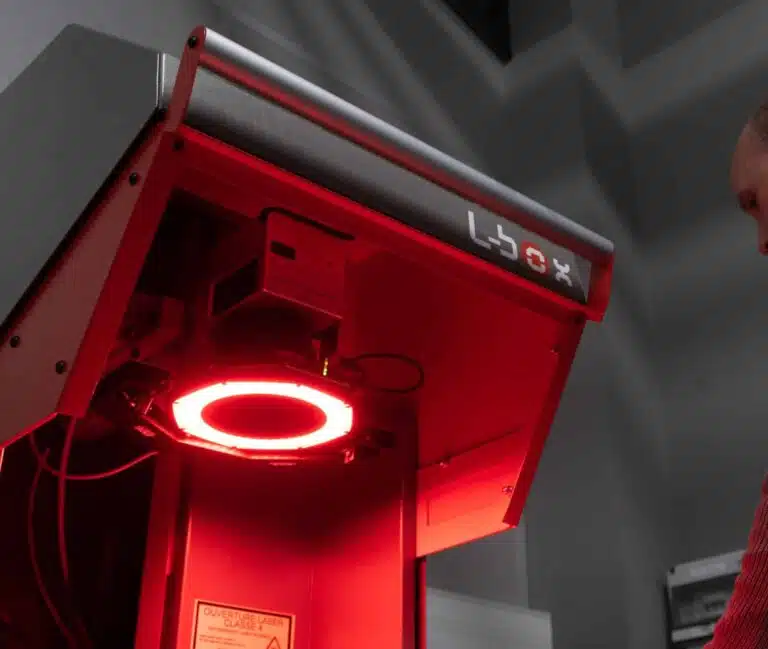
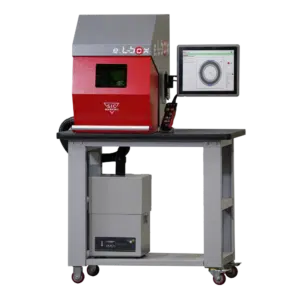
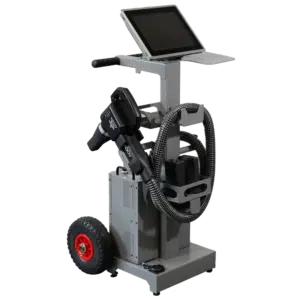
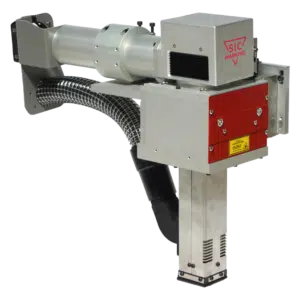
Based on each customer’s process, SIC MARKING supplies both integrable laser marking systems and standalone laser engraving machines.
Industrial laser marking addresses several essential requirements:
Traceability and part identification
Regulatory compliance and quality standards
Optimizing manufacturing processes
Durability and environmental sustainability
Flexibility and material compatibility
Aesthetics and brand identity
On materials such as stainless steel, anodized aluminum, or titanium, industrial laser marking achieves precise, long-lasting contrast, opening up numerous aesthetic options.
The process delivers a uniform, high-quality finish that appeals equally for technical components and premium design elements.
As laser marking uses no consumables, consistency in series production is assured: the depth, shade, and texture of the mark stay the same from part to part.
This helps cut down on reworks, maintenance costs, and scrap rates – a significant advantage for industrial production.
A top-quality laser mark raises the perceived value of the product.
A logo engraved with precision on a visible part lends a premium finish and highlights the manufacturer’s technological know-how – a decisive strength in demanding fields such as aerospace and space, watchmaking, the medical field, and precision electronics.
Across metals, plastics, and specialty materials, laser marking must guarantee optimal compatibility between the laser and the material.
It has to provide a permanent mark that holds up against wear, corrosion, and elevated temperatures, while offering excellent contrast on polished or matte surfaces – without weakening the material.
Selecting the right laser wavelength and power (fibre, UV, or green laser) is decisive for protecting material integrity and delivering dependable industrial traceability, while also achieving a refined finish and compliance with legal standards.
our solutions
Contact us
Need information?