When managing industrial integration projects, marking is never a standalone topic.
It must integrate seamlessly into the production line, comply with process constraints, meet regulatory requirements, and ensure long-lasting traceability—without cost overruns or schedule delays.
For over 30 years, SIC MARKING has been supporting industrial integrators in implementing marking solutions tailored to these constraints, both in France and internationally.
Production rate, marking depth, readability after treatment, material diversity, production environment: each project comes with its own set of constraints.
To address these, SIC MARKING relies on three complementary technologies: dot peen, scribing, and laser.
These technologies cover a wide range of applications on materials such as steel, aluminum, stainless steel, plastics, or painted and treated surfaces.
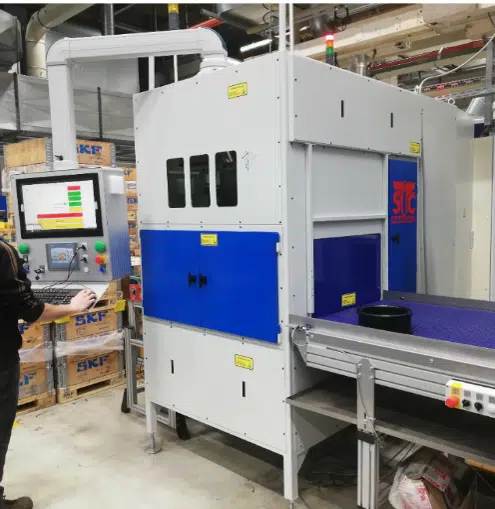
The solutions offered are suitable for both standalone stations and integrable equipment on automated production lines.
How can marking be integrated without adding complexity to the production line?
Integrating dot peen or scribing technology into an automated environment
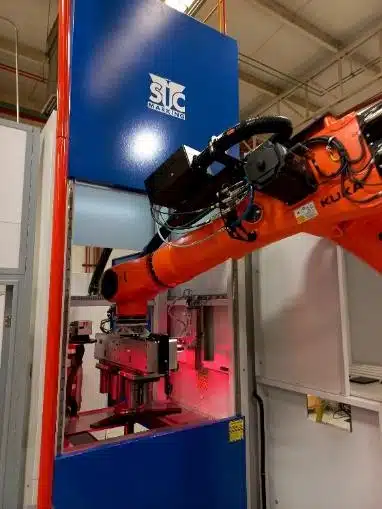
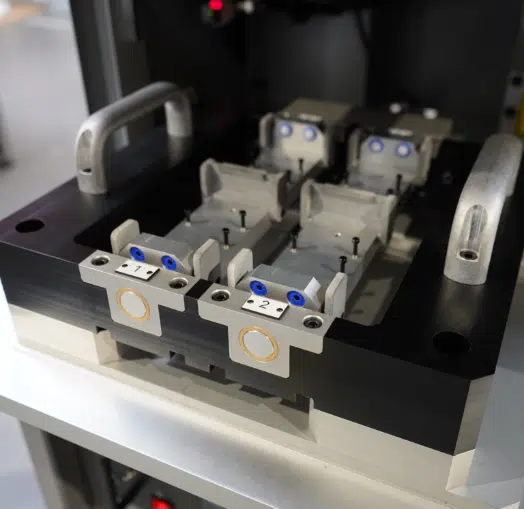
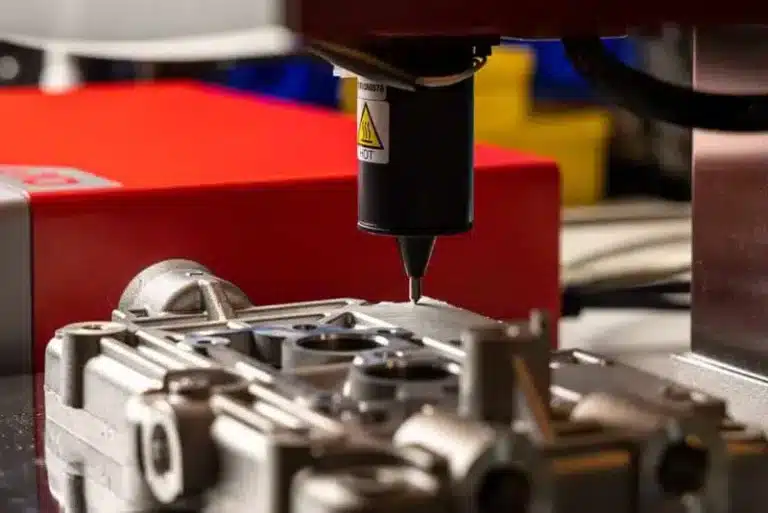
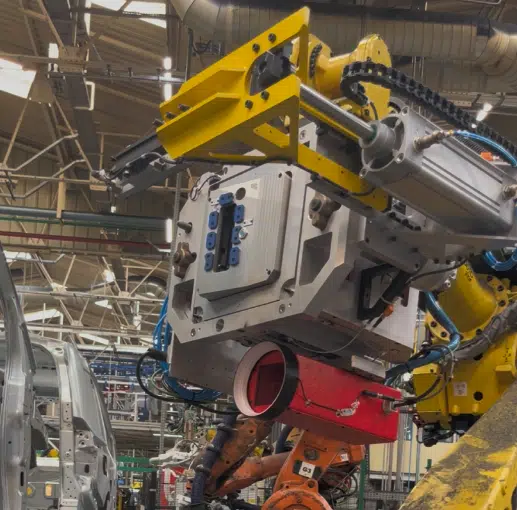
When a project requires standard or deep marking at high production rates, SIC MARKING’s integrable dot peen and scribing solutions are designed to fit directly into existing industrial architectures.
They meet industrial and aerospace requirements, can be controlled via dedicated controllers, and rely—depending on the application—on electromagnetic or pneumatic technologies to adapt to production line constraints.
Which laser solution is best suited for your application?
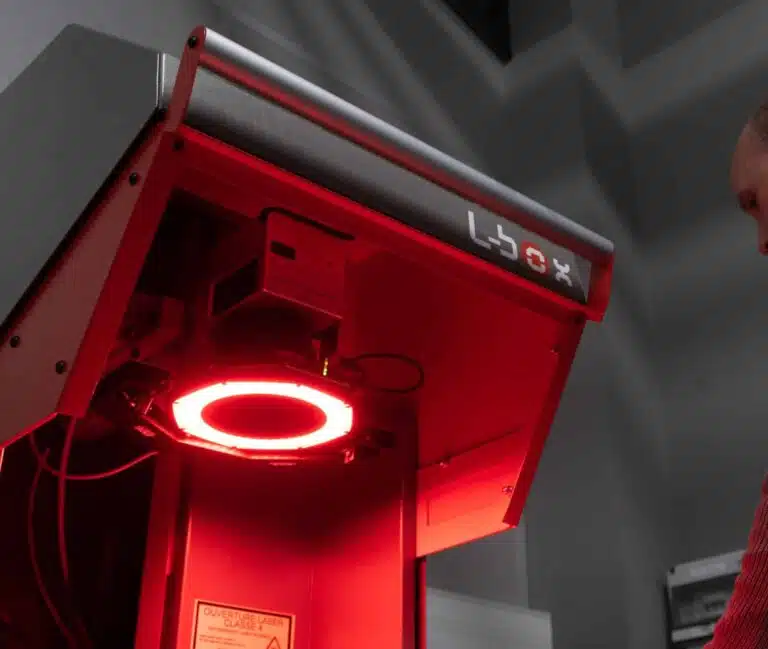
For laser applications, SIC MARKING offers a comprehensive range of integrable solutions, including Class 1 ready-to-integrate systems.
The architectures are modular: choice of laser source and power, compact marking heads, integrated vision options, 2D or 3D marking, and autofocus.
The various marking types (engraving, foaming, annealing, ablation) make it possible to operate before or after surface treatment, including on painted or coated parts, while preserving their functional properties.
Who supports you in the design and deployment of your project?
A project organization dedicated to integration
A successful marking project relies as much on methodology as on technology.
SIC MARKING is structured around a comprehensive organization that includes a design office (mechanical engineering, automation, machine vision), a test laboratory, a dedicated production workshop, and international project management teams.
This approach secures technical choices, anticipates integration constraints, and supports on-site deployment in coordination with the integrator’s teams.
Integration designed with field teams in mind
The solutions are developed to minimize complexity for integrators:
single connection to the controller, fieldbus compatibility, sensor and safety management, PLC programs, and quick start guides.
The objective is clear: reduce integration time, secure commissioning, and control total cost of ownership (TCO).
At which stage of the process should you perform marking?
Depending on the project, marking can be carried out:
Environmental constraints (temperature, dust, harsh environments) are taken into account through suitable protection solutions: air-conditioned enclosures, pressurized cabinets, or protective housings for marking heads and controllers.
How can you secure your technology choices over the long term?
Innovation is an integral part of the SIC MARKING approach, with dedicated engineering teams, continuous investment in R&D, numerous patents, and regular launches of new products.
The solutions also incorporate advanced features such as machine vision (DMC reading, OCR), marking and verification within a single process, and laser surface preparation.
How do you manage integration projects internationally?
With a presence in over 50 countries, SIC MARKING relies on its subsidiaries and distributor network to provide local support: installation, commissioning, training, maintenance, and technical assistance.
This organization enables the deployment of international projects while maintaining close operational follow-up.
Do you have an integration project? Let’s talk.
As an integrator, you need a partner who understands your process constraints, ensures your deadlines and budgets, and offers reliable, integrable marking solutions.