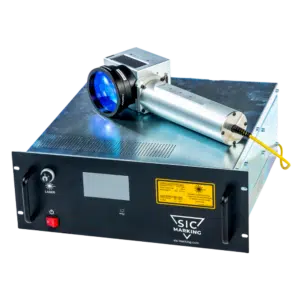
Plastic parts have become a cornerstone of modern manufacturing. From the automotive sector to electronics, and through medical, aerospace, and electrical equipment, engineering polymers are steadily taking the place of metals thanks to their low weight, strength, and ease of processing.
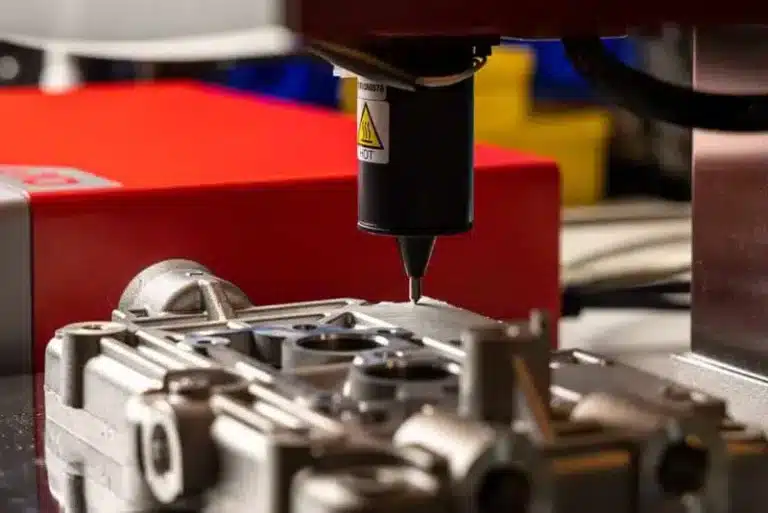
With plastic laser marking, every plastic part can be identified permanently, without contact, ink, or consumables.
Depending on the properties of the material, the laser beam can generate a contrasted mark, a surface engraving, or a clearly legible colour change, without compromising the integrity of the part.
That said, the quality of a laser mark on plastic is governed by many factors. The type of polymer (ABS, polycarbonate, polyamide, PEEK, PBT, POM…), the colour of the material, the additives in the formulation, the mineral fillers or glass fibres, and the capabilities of the laser system all directly determine the contrast achieved, code readability, and how the mark endures over time.
A specialist in industrial marking solutions, SIC MARKING supports manufacturers in selecting the technology best matched to their applications, building on proven expertise in plastic materials and industrial traceability
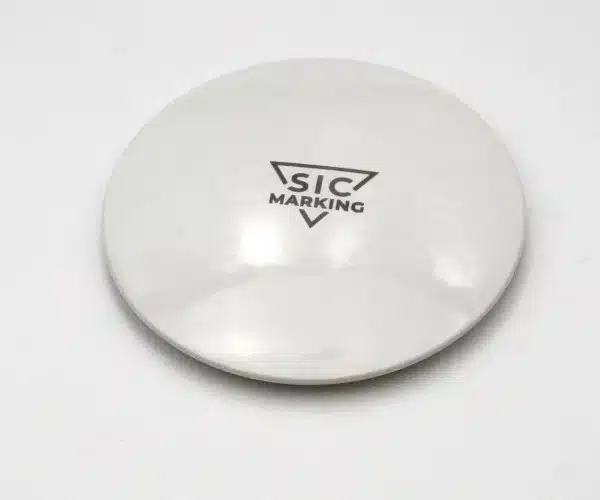
Laser marking of plastic answers these requirements by creating a permanent, precise identification built right into the plastic part.
Unlike labels, inkjet printing, or add-on markings, it uses no consumables and stays readable through handling, cleaning cycles, and the demands of the production environment.
Laser marking of plastic works with a large number of polymers found in industrial applications.
Every material, however, has its own physical and chemical properties that shape how it responds to the laser beam.
The makeup of the polymer, its colour, the presence of mineral fillers or fibres, and the additives introduced during production all determine the contrast achieved, the quality of the mark, and its durability over time.
By fine-tuning the laser parameters, permanent marks can be created on the vast majority of engineering plastics used in industrial traceability.
The polymer formulation, pigments, dyes, glass fibres, mineral fillers, and specialized additives all directly influence the contrast achieved and the final quality of the mark.
This is why SIC MARKING carries out marking trials to fine-tune the laser parameters for every application.
This validation stage ensures the readability of Data Matrix codes, QR codes, serial numbers, and industrial logos while keeping the mechanical and cosmetic properties of the plastic parts intact.
Unlike metals, laser marking of plastic is not based on one single physical phenomenon.
According to the nature of the polymer, its colour, the pigments involved, the additives contained in the material, and the settings of the laser beam, several mechanisms can come into play to create a permanent mark.
The objective is always to reach enough contrast to keep the marked information readable, while the mechanical and cosmetic properties of the part remain untouched.
Based on the intended application, the laser can induce a colour change, a foaming effect, a surface engraving, or the ablation of a coating.
A major strength of laser marking of plastic lies in its capacity to generate strong contrast, a prerequisite for keeping the marked information readable. Based on the nature of the polymer, its colour, and its formulation, the laser can bring about a colour change, a foaming effect, or a shallow engraving that reveals a black, white, grey, or strongly contrasted mark.
As opposed to printing or ink marking, the contrast arises directly from how the material responds to the laser beam. The outcome therefore hinges on numerous parameters, notably the composition of the plastic, the pigments involved, the additives introduced during production, and the settings of the laser system.
Building on its expertise in materials and industrial traceability, SIC MARKING supports manufacturers in defining the marking parameters best matched to each application. Preliminary trials fine-tune the contrast achieved and secure the readability of Data Matrix codes, QR codes, and other marked information, while the mechanical and cosmetic properties of the plastic parts stay intact.
Laser marking of plastic creates permanent identification right on the part, without labels or consumables.
Owing to the narrow focus of the laser beam, everything from alphanumeric characters to complex 2D codes can be marked while keeping excellent read quality.
According to production needs, the marked information supports the identification of plastic components, production monitoring, quality control, and regulatory compliance. It can be read visually or automatically through machine vision systems and handheld readers.
The terms plastic laser marking and plastic laser engraving are frequently treated as synonyms. In reality, they describe two separate processes serving different goals.
The decision rests mainly on what the application demands: cosmetic quality, the contrast level required, marking depth, resistance to mechanical wear, and automated reading constraints.
Laser marking is typically the first choice for industrial traceability, whereas laser engraving is selected whenever material removal is called for.
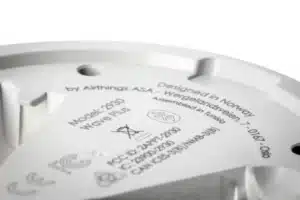
Contrast laser marking alters the appearance of the plastic locally while removing virtually no material. Under the laser beam, the polymer surface shifts in colour or structure, creating visible contrast against the rest of the part.
The geometry of the part is left practically untouched, a real benefit for precision components and cosmetic surfaces.
Owing to the narrow focus of the laser beam, it delivers highly accurate marks, ideally matched to automated reading systems and high-rate production.
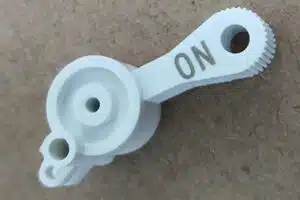
Plastic laser engraving relies on a different principle. The beam takes away a small amount of material to form relief of greater or lesser depth directly in the polymer.
The depth achieved depends notably on:
Engraving is the right fit whenever the mark has to stay visible in spite of repeated friction, frequent cleaning, or significant mechanical stress.
Laser engraving typically holds up better against wear than a plain surface mark, though it changes the surface finish of the part more noticeably.
Across most industrial applications, contrast laser marking stands as the go-to solution for identifying plastic parts. It provides an excellent degree of readability while the integrity of the material is maintained.
Laser engraving, for its part, is set aside for applications calling for a deeper mark or greater resistance to mechanical wear.
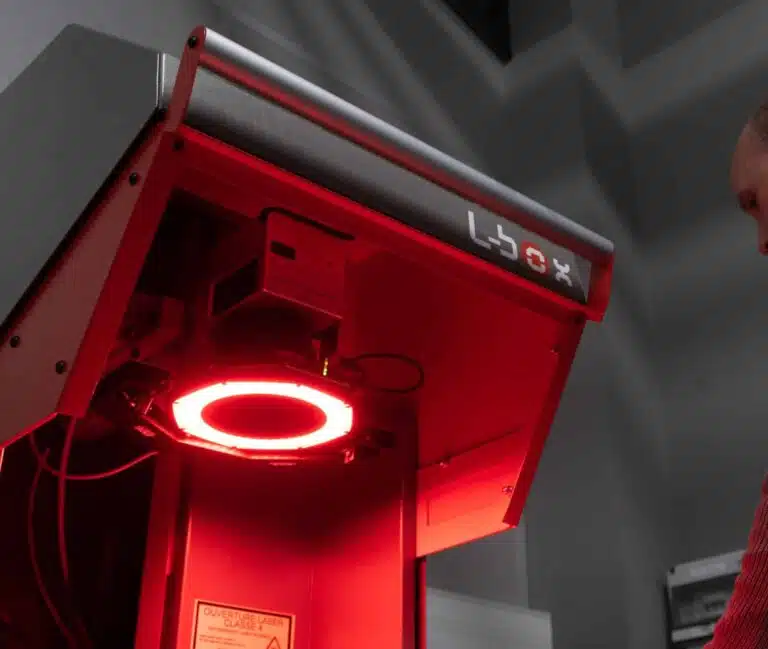
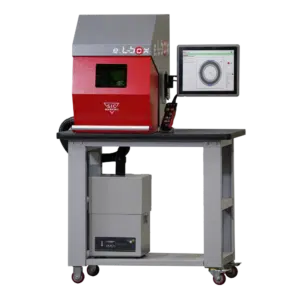
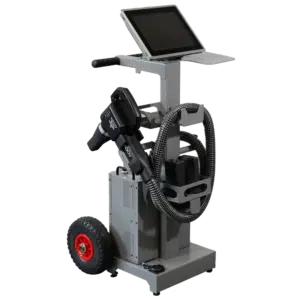
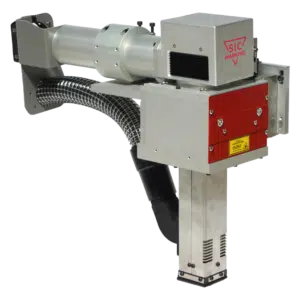
Explore our flagship laser marking equipment, spanning our Portable machines, Modules for production line integration, and Standalone marking stations.
Contact us
Need information?
Reach out to one of our experts!