Aluminium is among the most widely used materials in industrial production: lightweight, ductile, easily machinable, and available across a broad range of surface conditions (raw, anodised, polished, painted).
These characteristics directly shape the marking approach required, based on the alloy grade and surface finish.
Its low weight increases demand for fast, reliable marking solutions suited to industrial production environments.
These properties make aluminium a dependable and cost-effective substrate for industrial traceability, when the marking technology is properly selected for the application.
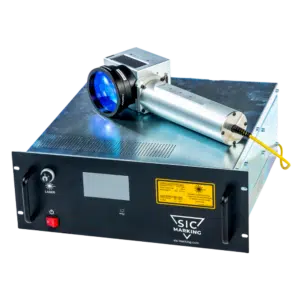
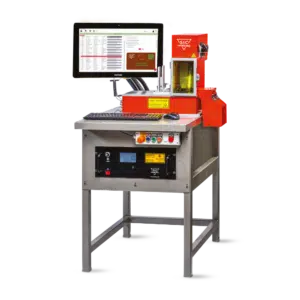
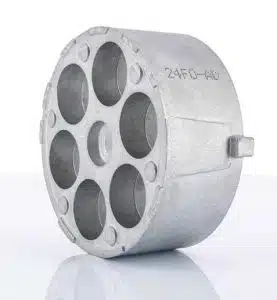
SIC MARKING offers a complete range of aluminium marking solutions — laser, dot peen and scribing — covering the full range of aluminium part configurations, from rough foundry castings to anodised aluminium enclosures.
The aluminium marking systems available deliver permanent, machine-readable marks, whether for 2D traceability, serial numbers or functional marking (machining references, etc.).
Depending on the marking technology selected, the process can be optimised for definition and visual contrast or for mechanical depth and resistance to downstream surface treatments.
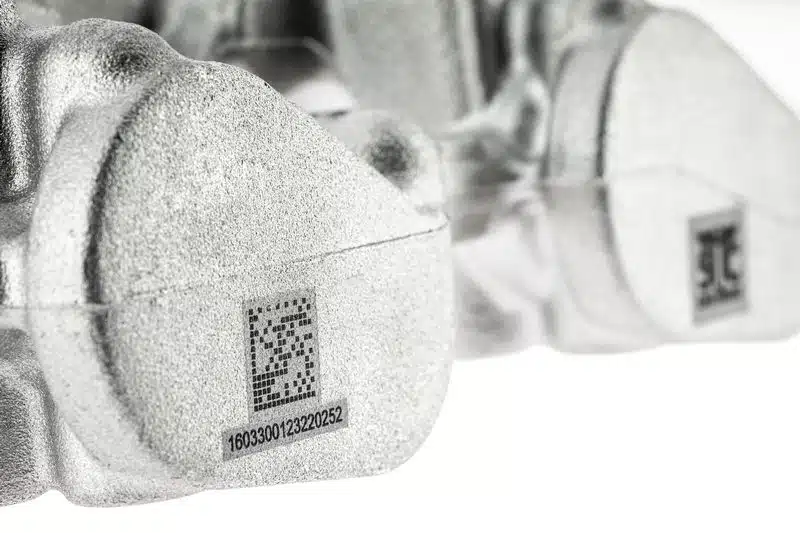
The selection of the appropriate aluminium marking technology depends primarily on surface condition, alloy grade, part thickness, and the thermal and mechanical constraints of the application.
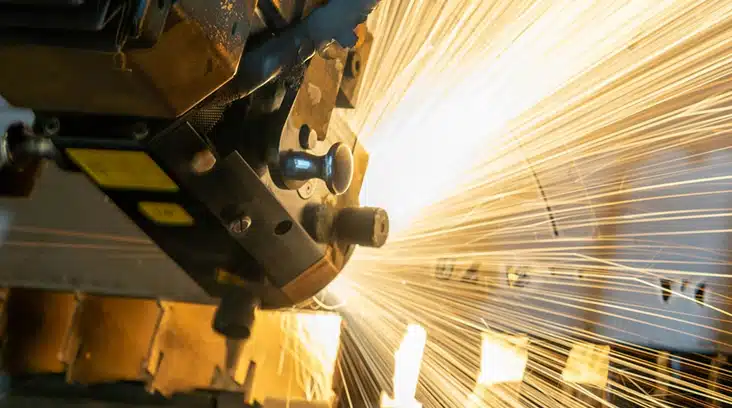
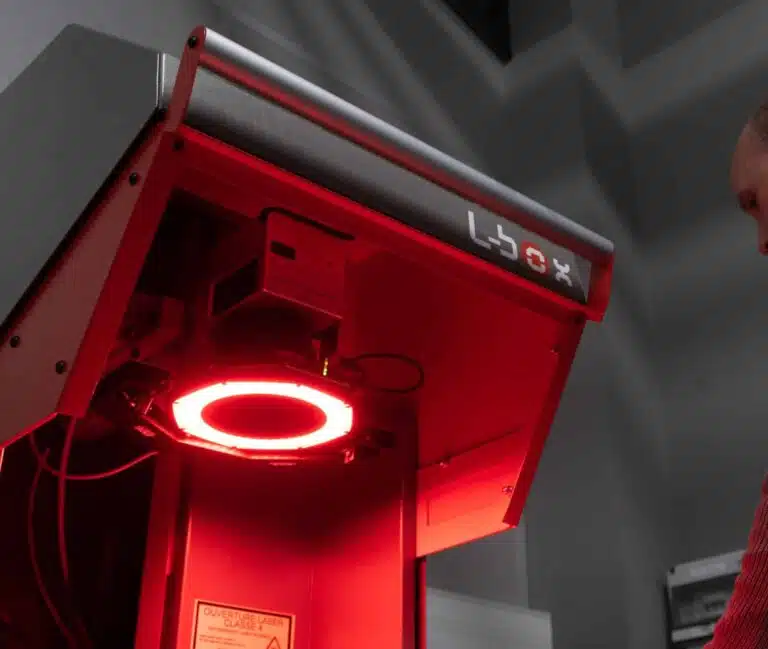
Laser marking of aluminium is well suited to all aluminium types, regardless of part size or surface finish. It is the recommended solution when visual contrast, mark definition or marking depth are key requirements, while ensuring the part remains free from distortion.
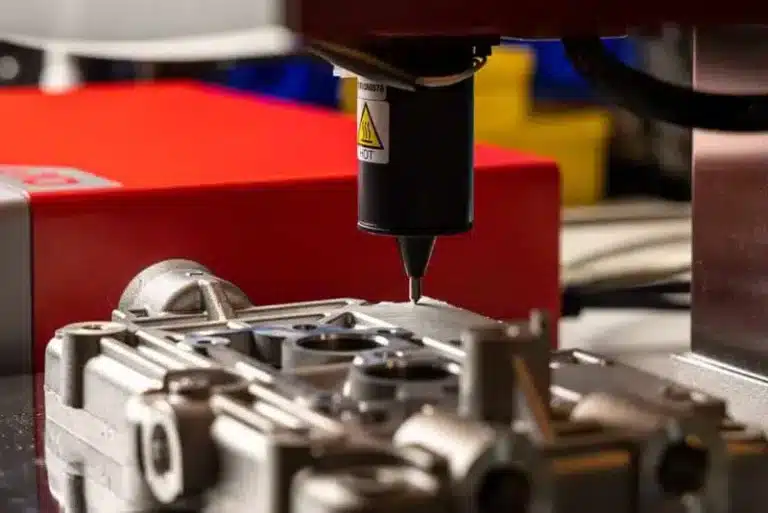
Dot peen marking of aluminium is recommended for rough or uneven surfaces, or for applications requiring a deep, durable mark — particularly where legibility must be maintained after painting, surface treatment or exposure to demanding operating environments. These requirements may also be addressed by scribing or laser marking, depending on the depth, precision and contrast required.
Scribing of aluminium is selected when mechanical mark retention is the primary requirement, for straightforward linear marking on solid or heavy-section aluminium parts.
The key criteria to consider for permanent marking on aluminium are legibility, contrast and the required marking depth.
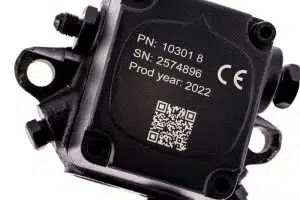
DataMatrix ECC200 is the established standard for industrial traceability: it provides high data density, strong tolerance to marking defects and reliable compatibility with aluminium marking, whether anodised or raw, when the process is correctly configured for the application.
Laser marking produces sharp contrast, well suited to automated reading, while dot peen marking creates recessed dot impacts that remain legible even on cast parts or rough surfaces. This code type is widely required in supplier quality documentation across the aerospace and automotive sectors to support unit-level traceability.
The QR Code, more visually recognisable and lower in data density, is primarily used for end-user interaction and maintenance workflows (product datasheets, cloud access). It marks very effectively with laser, provided module sizing is correctly defined.
In production, QR codes are typically configured with larger modules than a DataMatrix to ensure reliable scanning by smartphone or tablet, even from a significant distance.
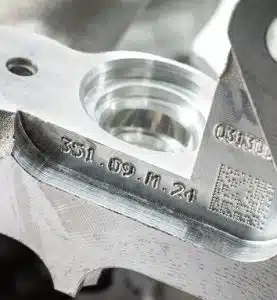
Serial numbers, batch numbers and other part identifiers are standard requirements on frames, engine blocks and machined components, and must remain legible after wear, cleaning and inspection operations.
Laser marking delivers fine, high-contrast marks — including clear visual contrast on anodised aluminium — while dot peen marking ensures long-term durability in dusty, high-temperature or high-vibration environments, owing to its mechanical mark depth.
Scribing is selected when an engraved appearance or mechanical mark retention is required, particularly for straightforward linear marking applications.
For operational traceability, it is common practice to combine a human-readable serial number with a 2D code: the operator immediately identifies the visible number, while the scanner verifies the match against the DataMatrix or QR code marked on the aluminium part.
This dual-reading approach reduces the risk of error and simplifies rework and product recall operations.
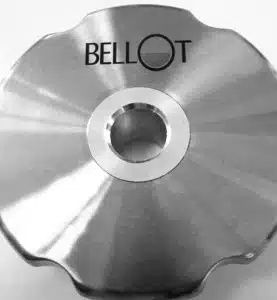
For complex logos and regulatory pictograms, fibre laser marking is generally the recommended solution. It delivers high precision and reproduces fine detail — typically in the range of a few hundred micrometres — with high contrast: bright marking on anodised aluminium or high-contrast marking on raw aluminium, depending on alloy grade and marking parameters.
When graphical accuracy is critical — manufacturer’s logos, safety pictograms, micro-text — laser marking provides consistent definition, including on small-scale features or fine fill areas.
For rough surfaces (castings, raw parts) or when a tactile mark is needed, dot peen marking is the preferred solution. It produces logos formed by recessed dot impacts, which remain legible even after machining or post-treatment.
Scribing of aluminium is selected when an engraved appearance combined with high mechanical mark retention is needed — for example on plates or decorative elements where durability and visual consistency are the primary requirements.
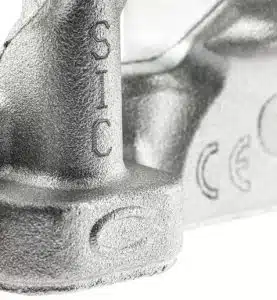
Advanced applications combine requirements for precision, data density and mechanical mark durability. They rely primarily on fibre laser marking for fine line definition and high contrast, and on dot peen marking when wear resistance and mechanical mark depth are the determining factors.
In practice, laser marking achieves high accuracy — in the range of a few tenths of a millimetre — for graduation marks and fine text, while dot peen marking delivers marking depths typically between 0.2 and 0.5 mm, depending on alloy grade and process settings, for durably legible references on structural aluminium parts.
These approaches are widely applied in aerospace, medical device and electronics manufacturing, where traceability requirements frequently call for a DataMatrix ECC200 code to be combined with metric or functional references on a single aluminium part.
Aluminium marking technology selection is then guided by the balance required between optical readability, mechanical resistance and cycle time — which can range from a few hundred milliseconds to several seconds depending on marking density and complexity.
Aluminium, valued for its low weight, ductility and compatibility with surface treatments (anodising, painting, technical coatings), is well suited to permanent laser marking, dot peen marking and scribing.
These permanent marking technologies produce clean, precise marks — high-contrast or deep as required — while maintaining reliable legibility on raw, anodised or machined aluminium, provided the marking process is suited to the surface condition.
This versatility enables aluminium marking to address the traceability and compliance requirements of the automotive, aerospace, agricultural, medical, electronics, energy and industrial machinery sectors.
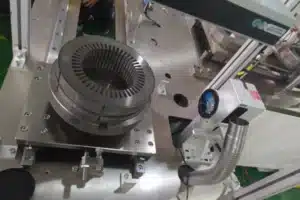


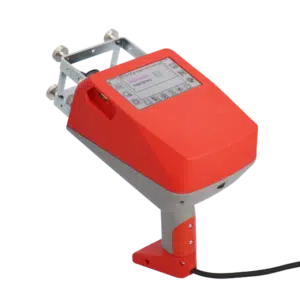
Discover our key laser marking, micro-percussion, or scribing equipment, including Portable Machines, Integrable Modules for Production Lines, or Autonomous Marking Stations.
Contact Us
Have a question or need more information?
Reach out to one of our marking specialists!