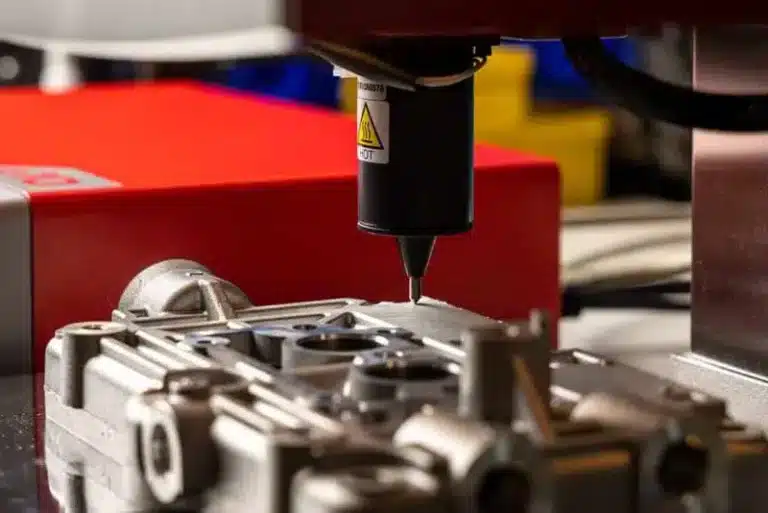
Laser marking stands as a leading technical solution for meeting the requirements of traceability, compliance, and efficiency across industrial processes.
It covers the marking requirements of a broad range of sectors – including aerospace and space, the food and beverage sector, the medical field, and the automotive sector – along with the specific characteristics of a wide variety of materials, whether metals, plastics, or composites.
Laser technology produces a permanent mark that is precise and fully legible, without compromising the mechanical integrity of the parts.
This permanent marking strikes an optimal balance between engraving depth, contrast, and visual quality.
Once integrated into production lines, laser marking makes a significant contribution to process automation.
It makes it possible to synchronize marking with the production flow, thereby lowering downtime, errors, and operating costs while raising productivity.
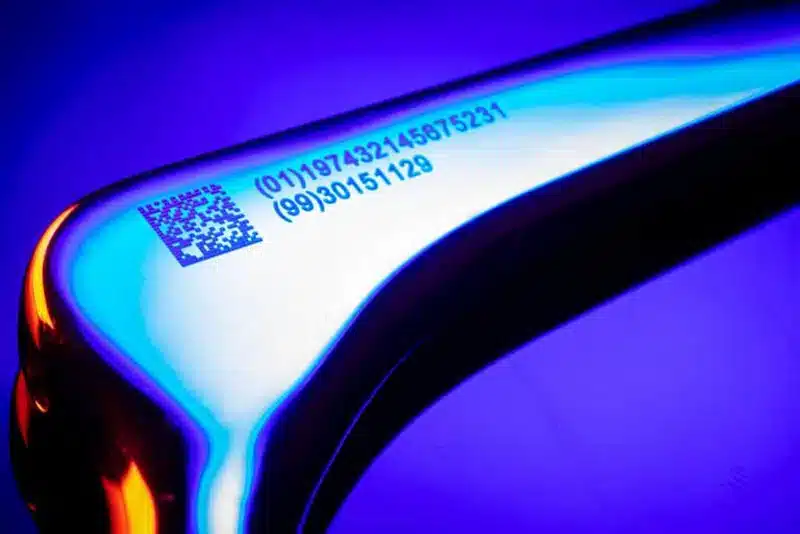
Laser marking also guarantees, as a core capability, the unalterable inscription of critical data (serial numbers, DataMatrix or QR codes) and secures compliance with traceability standards (CE, UDI). The consistency of the marking and the absence of consumables make laser marking a solution that is both efficient and sustainable for industry.
To secure repeatable production and meet the strictest quality requirements, SIC MARKING grounds its laser expertise in thorough preliminary testing.
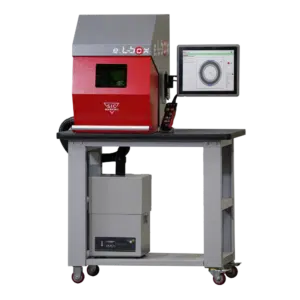
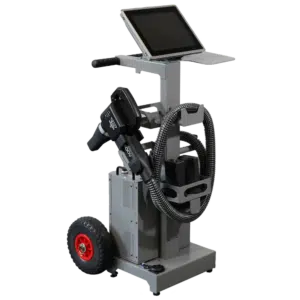
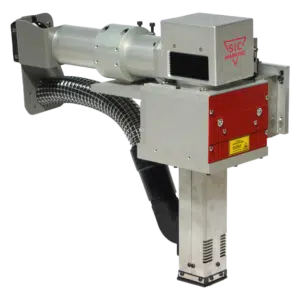
Based on each customer’s process, SIC MARKING supplies both integrable laser marking systems and standalone laser engraving machines.
Industrial laser marking addresses several essential requirements:
Traceability and part identification
Permanent laser engraving makes it possible to apply unique information directly onto the material surface – such as serial numbers, DataMatrix or QR codes, logos, or product references.
These marks support automated data collection and end-to-end traceability over a part’s entire life cycle.
The mark stays permanently legible, even when subjected to abrasion, contact with solvents, or demanding environments.
Permanent laser marking further allows production data to be fully integrated into ERP and MES systems through the automated decoding of the marked information.
Regulatory compliance and quality standards
European and international regulations – CE marking, UDI for the medical field, AS9100 for aerospace and space, along with ISO 13485 for medical devices – call for permanent marking that stays perfectly legible and traceable over the product’s full service life.
Meeting these technical requirements demands an engraving depth that is closely controlled, a defined contrast, and strong repeatability.
The mark must stay perfectly legible even after heat treatment, galvanizing operations, or exposure to chemical agents.
Laser marking enables fine adjustment of all the key parameters – power, frequency, speed, and focus – to obtain optimal contrast on materials such as stainless steel, titanium, aluminum, or plastics, securing compliance over the long term.
Optimizing manufacturing processes
Bringing laser marking inline through integration of the laser process merges previously separate operations into a single step coordinated with the production flow.
This lowers downtime and improves overall productivity.
What is more, the inherently repeatable precision of laser marking maintains consistent quality without calling for frequent adjustments.
This eases the operators’ workload and frees them to concentrate on higher-value tasks.
Setting up an automated laser marking station, connected to ERP or MES systems, translates into fewer reworks and stronger real-time traceability.
This benefits OEE indicators as well as compliance with sector standards.
As laser marking uses no consumables (inks, ribbons, solvents), operating costs come down right away.
On top of that, the long service life of laser sources cuts replacement frequency and maintenance needs.
Durability and environmental sustainability
Requiring neither chemical additives nor solvents, laser marking does away with all consumables (such as inks or ribbons) and the waste that comes with them.
Fibre laser technology delivers a service life frequently above 50,000 operating hours, which limits component replacement and the generation of electronic waste.
It generates no liquid waste and no significant emissions, helping to bring down waste treatment costs and to ease compliance with environmental regulations.
In production, laser marking fits smoothly into automated manufacturing lines and is notable for its controlled energy consumption – generally only a few hundred watts, depending on the power in use.
Flexibility and material compatibility
The laser source is set up to match the specific characteristics of each material: steel, stainless steel, aluminum, titanium, and composite materials keep their mechanical properties while guaranteeing lasting legibility of the marks.
The process parameters – power, frequency, pulse duration, repetition rate, and scan speed – can be tailored to keep the heat-affected zone to a minimum and to protect mechanical tolerances.
Through precise laser adjustment, it is possible, for instance, to obtain optimal contrast on anodized aluminum without harming the surface layer, or to avoid yellowing on technical plastics.
Aesthetics and brand identity
Laser marking is prized for its extreme precision and outstanding engraving quality. With its fine laser beam, it can render crisp typography, detailed logos, and even microtext that stays perfectly legible at sizes under one millimetre. Depending on how the system is configured, marking resolution reaches an exceptional level – ideal for applications where legibility and durability matter most.
On materials such as stainless steel, anodized aluminum, or titanium, industrial laser marking achieves precise, long-lasting contrast, opening up numerous aesthetic options.
The process delivers a uniform, high-quality finish that appeals equally for technical components and premium design elements.
As laser marking uses no consumables, consistency in series production is assured: the depth, shade, and texture of the mark stay the same from part to part.
This helps cut down on reworks, maintenance costs, and scrap rates – a significant advantage for industrial production.
A top-quality laser mark raises the perceived value of the product.
A logo engraved with precision on a visible part lends a premium finish and highlights the manufacturer’s technological know-how – a decisive strength in demanding fields such as aerospace and space, watchmaking, the medical field, and precision electronics.
Across metals, plastics, and specialty materials, laser marking must guarantee optimal compatibility between the laser and the material.
It has to provide a permanent mark that holds up against wear, corrosion, and elevated temperatures, while offering excellent contrast on polished or matte surfaces – without weakening the material.
Selecting the right laser wavelength and power (fibre, UV, or green laser) is decisive for protecting material integrity and delivering dependable industrial traceability, while also achieving a refined finish and compliance with legal standards.
our solutions
Contact us
Need information?