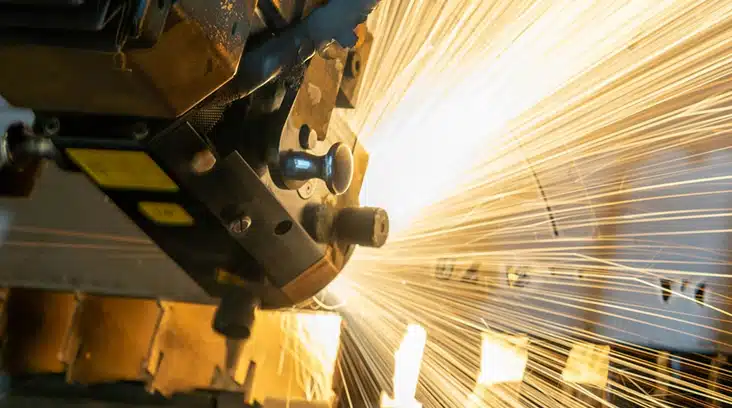
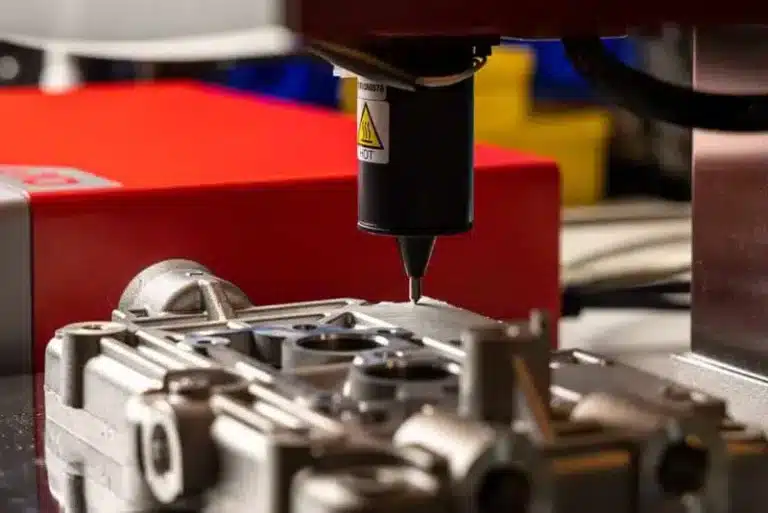
A fitting a few centimetres long. A structural profile reaching 1,800 mm. In between, the entire rail maintenance workshop: steel, aluminium, stainless steel, parts mounted in hard-to-reach locations and others produced in series. Can all of this really be marked with the same station, set up the same way? That’s exactly the question we had to answer.
On TER and TGV trainsets, maintenance never deals with a single type of part. Three constraints shape the choice of a marking solution:
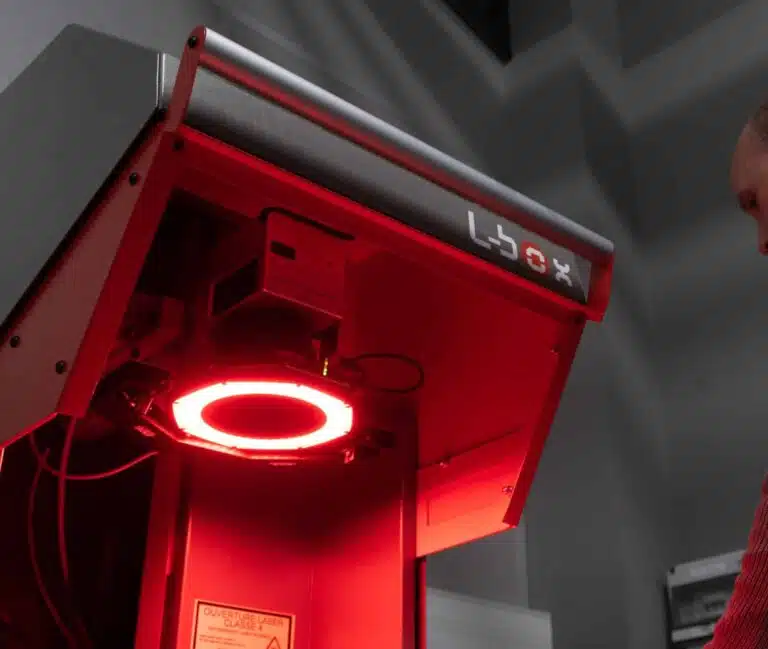
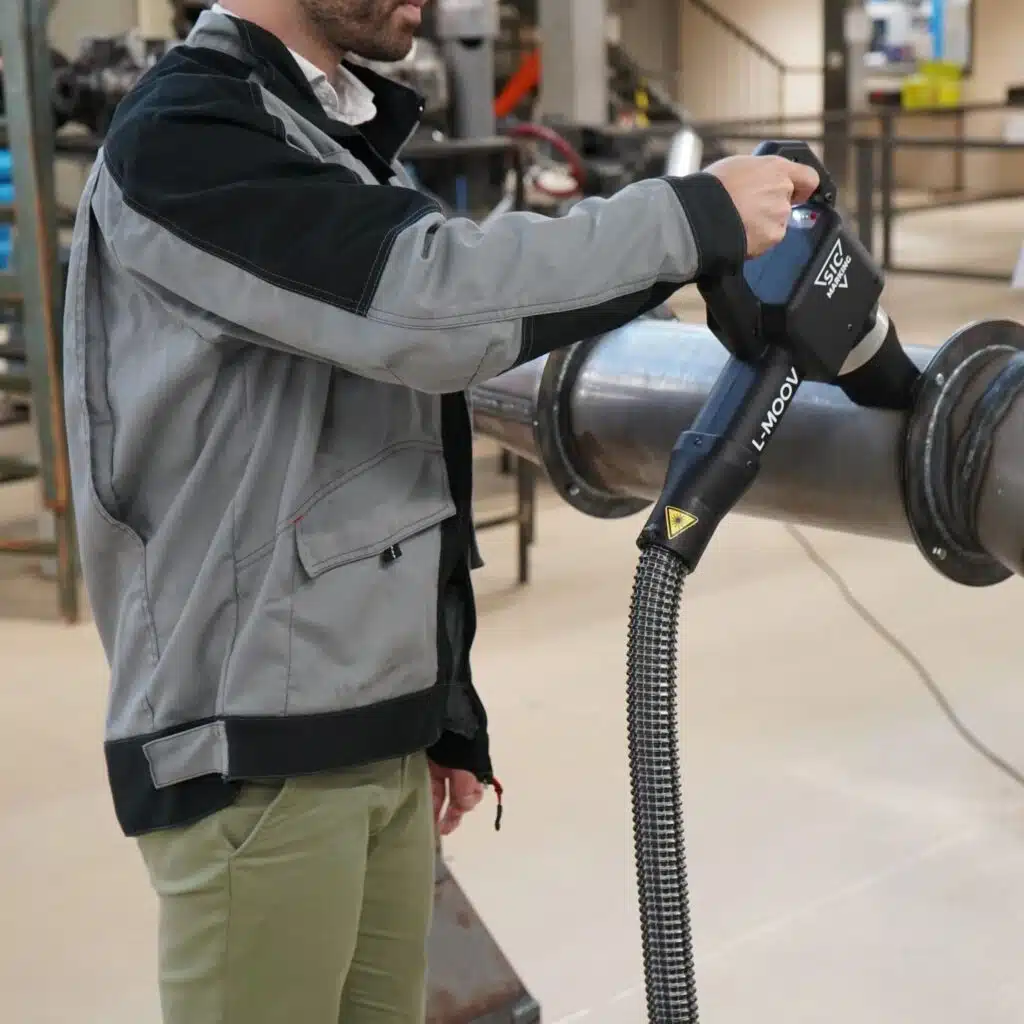
Rather than forcing a single station to cover every situation, we deployed our L-MOOV portable laser in three distinct configurations, each designed for a specific workshop context: a mobile version for large parts and hard-to-reach areas, a fixed version for recurring series, and a hooded version for small components.
Control runs through our SIC FACTORY AUTOMATION software, which integrates into the existing production flow. We also planned ahead: the solution is ready to accommodate 2D codes (QR code / Data Matrix), in line with GS1 standards, so workshops aren’t locked into today’s technology.
The laser mark stays legible over time, whatever the metal — a decisive point when parts return to the workshop at every maintenance cycle and undergo handling, cleaning and mechanical stress.
We adapt each configuration to the station where it will be used, without redesigning the workshop around the equipment. And because rail traceability keeps evolving, future compatibility with GS1 2D codes lets the marking system move forward without being replaced.
The results show over time: fewer tracking errors, more reliable stock management, and a process that follows the actual pace of maintenance rather than constraining it.
How many part configurations does your workshop handle today? Will your current marking hold up against future 2D standards? What if a single laser could cover your entire fleet, from the small fitting to the structural profile?
We support you from the initial workshop assessment through to commissioning your solution. One part, one context, one configuration, without ever changing lasers.
Article written with the expertise of Xavier Ducret, R&D and Industrialisation Director
Need information?
Get in touch with one of our experts!